Red light therapy has earned its place in the modern skincare routine, not as a passing trend but as a well-researched approach to cellular skin renewal. Whether you're targeting fine lines, uneven tone, or dull-looking skin, one question comes up consistently: how long should each session actually be? The answer depends on more than just a number. Session length, frequency, your skin's current condition, and the device you're using all play a role. This guide breaks it all down so you can build a protocol that genuinely works for you.
How Long Per Session? What the Research Actually Says
The consensus across both published research and professional recommendations points to 10 to 20 minutes per session for facial red light therapy at home. This range reflects what has been consistently used in peer-reviewed studies and tends to align well with the output parameters of quality at-home LED devices.
That said, session duration is not a one-size-fits-all figure. The amount of energy delivered to your skin depends on your device's power output, meaning a high-irradiance panel may reach an effective dose in 10 minutes, while a lower-powered device may benefit from sessions closer to 20 minutes.
What matters most is that your sessions are long enough to deliver a meaningful dose of light energy. Shorter, consistent sessions outperform long, inconsistent ones. Always refer to the guidelines provided with your specific device for the most accurate recommendation.
How Often Should You Use Red Light Therapy on Your Face?
Frequency is just as important as duration. The photobiomodulation research is clear on this point: it is the cumulative effect of regular sessions over time that drives visible skin improvements, not any single long exposure.
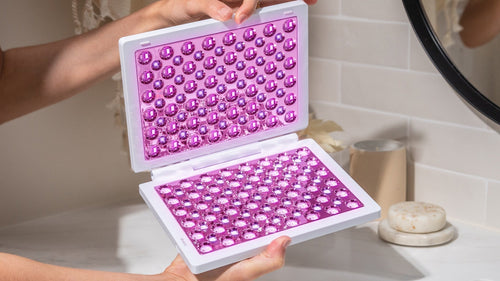
A rhythm of 3 to 5 sessions per week represents the optimal range for most people. A study published in Lasers in Medical Science investigated the effects of different photobiomodulation application frequencies on facial rejuvenation in 95 women aged 45 to 60, using a red LED mask at 660 nm for 21-minute sessions. The group receiving three weekly applications showed strong results over four weeks.¹ Consistency matters far more than intensity.
If your schedule only allows for two sessions per week, that can still yield meaningful results over a longer timeframe. The key is to avoid long stretches without treatment once you've established your routine.
If You're Just Starting Out: Begin Gradually
New to red light therapy? Starting with shorter sessions is the smarter approach. Begin with 5 to 10 minutes per session, 2 to 3 times per week for the first one to two weeks. This gives your skin time to acclimate and helps you gauge how it responds before committing to a full protocol.
Sensitive skin types, in particular, benefit from this gradual ramp-up. Once you've confirmed your skin is responding well, you can increase session length and frequency toward the 10 to 20 minute, 3 to 5 times per week target.
How to Prepare Your Skin Before a Session
For red light to work at its best, it needs to reach your skin without interference. A few simple preparation steps make a real difference:
● Cleanse your face thoroughly before every session. Makeup, SPF, and skincare products sitting on the surface of your skin can block light from penetrating effectively.
● Pat dry and make sure your skin is completely dry before you begin.
● Skip active serums before the session. Retinol, AHAs, BHAs, and vitamin C can increase light sensitivity. Apply these after your session, not before.
● Protect your eyes. Although LED therapy devices designed for home use are generally considered low-risk, wearing protective eyewear is a smart precaution, especially for sessions near the eye area.
The reVive Light Therapy™ Lux Clinical and Lux dpl® IIa devices are engineered to work directly on clean, product-free skin. Following these steps ensures you're getting the full benefit of every session.
What to Do (and Avoid) After Your Session
Post-session care is part of the protocol. Here's how to make the most of it:
● Apply your serums and moisturizer immediately after. Red light therapy supports cellular activity, and some skincare professionals suggest this may create a favorable window for ingredient absorption. Reach for hydrating or antioxidant-rich formulas.
● Hold off on retinol and chemical exfoliants for at least a few hours post-session if your skin is on the sensitive side. These actives can increase surface sensitivity and are best used on alternate evenings.
● Apply SPF the morning after a session. Your skin is working hard at the cellular level, and protecting it from UV exposure is always the right call.
How Long Before You See Results? A Realistic Timeline
This is the question most people are really asking. The honest answer is that results from red light therapy build progressively, and they're worth the wait.
|
Timeframe |
What You May Notice |
|
Weeks 1–2 |
Skin may look more rested; early glow or improved hydration |
|
Weeks 3–4 |
More visible radiance, potential reduction in redness or uneven tone |
|
Weeks 8–12 |
Improved firmness, softening of fine lines and wrinkles |
|
3+ months |
More significant and lasting skin improvements with continued use |
Published research supports this progression. A 2023 study in Skin Research and Technology demonstrated that consistent red light sessions over three months produced measurable improvements in skin elasticity, firmness, density, and the visible signs of aging across a panel of volunteers, with results that persisted for up to one month after the protocol ended.² A randomized controlled trial published in Photobiomodulation, Photomedicine, and Laser Surgery found that red light photobiomodulation produced a significant reduction in periocular wrinkle volume after 10 sessions over 4 weeks.³ Earlier foundational research by Wunsch and Matuschka also demonstrated efficacy for skin rejuvenation and intradermal collagen increase in a controlled setting.⁴
In an in-house study conducted by LED Technologies, Inc., 97.4% of participants reported a visible improvement in wrinkles, fine lines, or skin tone after consistent use of red light therapy. You can read the full study here.
How to know it's working: Look for gradual, cumulative changes rather than overnight transformation. Signs that your protocol is on track include a more even complexion, a reduction in the appearance of fine lines, and skin that feels more supple over time.
Frequently Asked Questions
Can I use red light therapy on my face every day?
Daily use is generally considered safe for most people, but it is not necessarily more effective than 3 to 5 sessions per week. Research consistently shows that regular, spaced sessions deliver the best cumulative results. If you choose daily use, keep sessions on the shorter end, around 10 minutes, and monitor your skin's response over time.
What should I avoid right after red light therapy?
Hold off on applying retinol, chemical exfoliants, or other high-potency actives immediately after a session if your skin tends to be sensitive. Instead, follow with gentle, hydrating skincare. Also give your skin consistent SPF protection on days when you've done a session, particularly before sun exposure.
How do I know if my red light therapy device is working?
Progress with LED therapy is gradual and cumulative. After 3 to 4 weeks of consistent use, most people begin to notice improved radiance and a more even complexion. Fine line and firmness improvements typically become more apparent between 8 and 12 weeks. Taking photos in the same lighting conditions every two to three weeks is a reliable way to track your progress.
Does session length change depending on the device I'm using?
Yes. A high-powered LED panel delivers more energy per minute than a compact handheld device, which means it may reach an effective dose in less time. Always follow the recommended session times in your device's instructions. reVive Light Therapy™ devices are engineered with specific output parameters, and the guidelines provided with each device are calibrated for optimal results.
Ready to experience the difference that a consistent red light therapy routine can make? Explore the reVive Light Therapy™ Lux Collection and find the device that fits your skin goals, your schedule, and your lifestyle.
Looking specifically for anti-aging results? Discover the full Red Light Therapy Anti-Aging Collection.
¹ Barbosa AM, et al. "Role of photobiomodulation application frequency in facial rejuvenation: randomized, sham-controlled, double-blind, clinical trial." Lasers in Medical Science, 2025. https://link.springer.com/article/10.1007/s10103-025-04383-1
² Couturaud V, Le Fur M, Pelletier M, Granotier F. "Reverse skin aging signs by red light photobiomodulation." Skin Research and Technology, 29(7), 2023. https://onlinelibrary.wiley.com/doi/10.1111/srt.13391
³ Mota LR, Duarte IDS, Galache TR, et al. "Photobiomodulation Reduces Periocular Wrinkle Volume by 30%: A Randomized Controlled Trial." Photobiomodulation, Photomedicine, and Laser Surgery, 41(2), 2023. https://pubmed.ncbi.nlm.nih.gov/36780572/
⁴ Wunsch A, Matuschka K. "A Controlled Trial to Determine the Efficacy of Red and Near-Infrared Light Treatment in Patient Satisfaction, Reduction of Fine Lines, Wrinkles, Skin Roughness, and Intradermal Collagen Density Increase." Photomedicine and Laser Surgery, 32(2), 2014. https://pmc.ncbi.nlm.nih.gov/articles/PMC3926176/