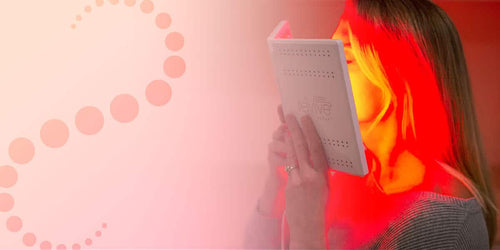
Pregnancy is a time when every wellness decision feels weightier than usual. If you've built red light therapy into your skincare or self-care routine, it's completely natural to wonder whether it's safe to continue once you're expecting. The honest answer is: it depends, and it starts with a conversation with your OB/GYN.
Red light therapy is one of the most studied non-invasive light-based treatments available today, with a growing body of research supporting its benefits for skin health and cellular regeneration. But pregnancy changes the equation, and the current science, while encouraging in several respects, doesn't yet provide enough clinical data on pregnant women to offer blanket guidance. Here's everything you need to know to have an informed conversation with your provider.
This article is intended for educational purposes only and does not constitute medical advice. Always consult your OB/GYN or healthcare provider before using any light therapy device during pregnancy.
What Is Red Light Therapy?
Red light therapy, also known as photobiomodulation (PBM), uses targeted wavelengths of visible red and near-infrared light, typically between 630 and 850 nm, to support cellular function. The light penetrates the skin at varying depths, where it interacts with the cells' energy centers to help support natural repair and regeneration processes.
Unlike UV light, red light is non-ionizing, meaning it does not damage DNA or carry the risks associated with sun exposure. It produces no heat intense enough to burn tissue, and it does not involve radiation in any harmful form. These properties are central to why it has attracted so much attention in the wellness, dermatology, and sports recovery spaces.
Is Red Light Therapy Safe During Pregnancy?
This is the question every expecting person using an LED device wants answered. The current consensus among medical professionals reflects the state of the research: red light therapy appears low-risk from a mechanistic standpoint, but robust clinical trials specifically involving pregnant women are not yet available.
What the Science Says
The most cited piece of research in this space is a 2022 study published in the Journal of Pregnancy (PMC-indexed), which investigated whether 670 nm red light could address oxidative damage in placental tissue associated with late-onset preeclampsia. Red light exposure at 670 nm was found to reverse changes caused by oxidative stress in placental tissue, helping restore normal cellular behavior and supporting the expression of key growth factors to levels observed in healthy tissue.¹
This is genuinely promising early-stage science. It suggests that red light, at specific wavelengths, may have a constructive role in placental health research. At the same time, large-scale clinical trials specifically involving pregnant women have not yet been conducted, which is why medical caution remains the standard recommendation.
Why Doctors Still Urge Caution
The absence of harm in preliminary research is not the same as confirmed safety in a clinical population. Pregnancy involves complex hormonal, vascular, and developmental processes that are still not fully mapped in relation to light therapy exposure. Most device manufacturers, including reVive Light Therapy™, recommend consulting your doctor before use during pregnancy, following the same precautionary principle applied to many wellness treatments.
The key message from the medical community remains consistent: red light therapy is not categorically contraindicated, but it should only be used during pregnancy under your provider's guidance.
Potential Benefits of Red Light Therapy During Pregnancy
While direct clinical evidence in pregnant populations is limited, the properties of red light therapy that make it valuable in general wellness contexts are well documented. Peer-reviewed research has established that red and near-infrared light therapy supports skin cell renewal, reduces redness, and promotes repair processes at a cellular level.² Hormonal changes during pregnancy can lead to acne flare-ups, uneven skin tone, and heightened skin sensitivity, making these documented skin-supportive properties particularly relevant. For expecting mothers dealing with pregnancy-related skin changes, targeted facial use with provider approval may offer a gentle, non-pharmaceutical option worth discussing with your care team.
Red Light Therapy by Trimester: What You Need to Know
One of the most searched aspects of this topic is whether the answer changes depending on how far along you are. The honest answer is that there is no trimester-specific clinical guidance currently available in the published literature. That said, the general framework applies throughout pregnancy.
First Trimester
The first trimester is considered the most sensitive period of fetal development, with major organ systems forming rapidly. Most practitioners advise the highest level of caution during this window, and many suggest pausing any non-essential wellness treatments until you've had your first prenatal appointment and can discuss your routine with your provider.
Second Trimester
For many women, the second trimester brings a return of energy and a desire to re-engage with self-care routines. If your OB/GYN has cleared you for continued use, the second trimester is generally when facial LED treatments are considered most practical, provided you follow all safety guidelines outlined below.
Third Trimester
Skin sensitivity often peaks in the third trimester as hormonal activity intensifies. If you're cleared to use a device, monitoring your skin's response closely and keeping sessions brief becomes even more important. Body-level treatments should remain off the table entirely throughout pregnancy.
Areas to Absolutely Avoid During Pregnancy
Regardless of which trimester you're in, certain areas of the body should not be treated with red light therapy during pregnancy:
● The abdomen and belly: do not apply any LED device directly over the uterus or growing baby
● The pelvis and lower back: avoid any proximity to the pelvic floor and reproductive organs
● The chest and breasts: hormonally sensitive tissue that becomes particularly reactive during pregnancy
● Any area of compromised skin: stretch marks, rashes, or inflamed skin all warrant extra caution
Facial use, under provider guidance, is the most widely discussed and most practically acceptable area of application during pregnancy.
Safety Guidelines If Your Doctor Clears You
If your healthcare provider gives you the green light, following best practices makes a meaningful difference.
Session Length
Keep sessions to 10 to 15 minutes maximum. Shorter, consistent sessions are always preferable to longer, infrequent ones, and this is especially true during pregnancy.
Device Requirements
Use only FDA-cleared devices operating within the 630–850 nm wavelength range. All reVive Light Therapy™ Lux Collection devices meet this standard, offering a safe, controlled therapeutic range designed for home use.
Skin Sensitivity Monitoring
Pregnancy hormones can significantly increase skin sensitivity. Start with shorter sessions than you normally would, and pause use if you notice any unusual warmth, redness, or irritation beyond your baseline.
Who Should Avoid Red Light Therapy Altogether?
Beyond pregnancy-related considerations, there are certain populations for whom red light therapy is generally not recommended without specific medical consultation:
● Individuals with photosensitive conditions or taking photosensitizing medications
● People with active skin cancers or a history of skin cancer
● Those with epilepsy or light-triggered seizure conditions
● Anyone using devices not suited to their condition or skin type without professional guidance
The Bottom Line: Should You Use RLT While Pregnant?
Red light therapy is a well-established, non-invasive, UV-free technology with a strong track record in skincare and cellular health. The science around its specific use during pregnancy is evolving, and what exists so far is more encouraging than alarming. However, the clinical gap is real, and it's a gap that matters when a developing baby is in the picture.
The answer is not a blanket yes or no. It's a personalized one that belongs in a conversation with your OB/GYN. If you get the green light, using an FDA-cleared device like those in the reVive Light Therapy™ Lux Collection, focusing on facial application only, keeping sessions brief, and monitoring your skin throughout are all steps that support responsible use.
Your wellness matters during pregnancy, not despite it.
Always consult your OB/GYN before incorporating red light therapy into your routine during pregnancy.
Frequently Asked Questions
Is red light therapy FDA-approved for use during pregnancy?
No red light therapy device holds a specific FDA clearance for use during pregnancy. Devices like the reVive Light Therapy™ Lux Collection are FDA-cleared for skincare applications, but this clearance does not extend to pregnancy-specific indications. Always consult your OB/GYN before use.
Can I use an LED face mask in the first trimester?
The first trimester is considered the most sensitive phase of fetal development. Most practitioners recommend pausing non-essential treatments and checking with your provider before continuing any LED device use, including facial devices, during this period.
Does red light therapy pose a UV risk during pregnancy?
No. Red light therapy devices in the 630–850 nm range are UV-free and non-ionizing. They do not carry the UV-related risks associated with sun exposure. This is one of the key reasons red light therapy is considered low-risk from a theoretical standpoint during pregnancy, though the absence of UV does not substitute for clinical evidence in a pregnant population.
What areas should I avoid treating with red light during pregnancy?
The abdomen, pelvis, lower back, and chest should not be treated with red light therapy during pregnancy. These areas are in close proximity to the uterus and hormonally active tissue. Facial use, under provider guidance only, is the most widely discussed option for pregnant women.
Explore the reVive Light Therapy™ Lux Collection:
Shop the Lux Collection | Explore Red Light Therapy Devices
References
¹ Griffin M, et al. "Red Light Mitigates the Deteriorating Placental Extracellular Matrix in Late Onset of Preeclampsia and Improves the Trophoblast Behavior." Journal of Pregnancy, 2022. https://pmc.ncbi.nlm.nih.gov/articles/PMC9045993/
² Avci P, et al. "Low-level laser (light) therapy (LLLT) in skin: stimulating, healing, restoring." Seminars in Cutaneous Medicine and Surgery, 32(1), 2013. https://pubmed.ncbi.nlm.nih.gov/24049929/