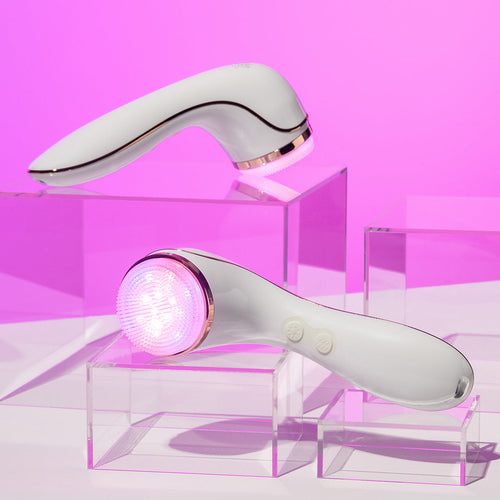
Red light therapy has become a go-to wellness ritual for people who want to support their skin, accelerate recovery, and take a more intentional approach to self-care. As the technology makes its way from clinical settings into everyday home routines, one question keeps coming up: do you actually need to protect your eyes during a session? The honest answer is: it depends. Three key factors determine what level of eye care is appropriate, namely the type of device you are using, the body area being treated, and whether near-infrared light is part of the equation. Here is what you need to know.
How Red Light Therapy Interacts with Your Eyes
Red light therapy works by delivering specific wavelengths of light, typically in the 630–670 nm range, deep into tissue where they stimulate cellular energy production. At these wavelengths, specialized photoreceptive enzymes within the mitochondria absorb light energy and respond by boosting the cell's ability to produce energy, which in turn drives reparative and restorative processes.¹
What makes the eyes a distinct consideration is that the retina is one of the most mitochondria-dense tissues in the entire body. It absorbs light efficiently by design, which is, after all, how vision works. While red LED light at therapeutic intensities sits in a very different category from UV radiation, it is worth being thoughtful about how much direct exposure the eyes receive, particularly over repeated sessions.
Devices that also emit near-infrared (NIR) light, typically in the 800–850 nm range, add an important layer to this conversation. NIR wavelengths are completely invisible to the human eye, which means there is no natural blinking or squinting reflex to help reduce exposure.² For that reason, NIR-emitting devices call for a more deliberate approach to eye safety.
Do You Always Need Eye Protection? A Practical Overview
The short answer: not always, but the right precaution depends on your specific setup. Here is a simple breakdown:
|
Device Type |
Treatment Area |
NIR Included |
Recommended Eye Care |
|
Compact LED device (home-use) |
Face |
No |
Close eyes or use blackout goggles |
|
LED panel (home-use) |
Face / head |
Yes |
Blackout goggles recommended |
|
LED panel (home-use) |
Body (chest, back) |
Yes |
Eyes away from direct beam; no protection needed |
|
Professional-grade panel |
Face / full body |
Yes |
Protective goggles required |
|
LED face mask |
Face |
No |
Follow device instructions; keep eyes closed |
The takeaway: device intensity and treatment proximity to the eyes are the two variables that matter most. Treating your back or legs while standing at a distance from a panel involves essentially zero eye exposure. Treating your face, neck, or décolletage at close range is a different situation entirely.
When Closing Your Eyes Is Enough
For low-to-moderate intensity home devices, particularly compact LED tools designed for targeted facial use like those in the reVive Light Therapy™ Lux Collection, closing your eyes is generally a reasonable precaution during treatment. The devices in this range are engineered for safe, effective home use, and their output levels reflect that design intent.
That said, "closing your eyes" should mean exactly that: eyes fully shut, not squinting. Closed eyelids provide a meaningful physical barrier for the light levels produced by personal-use LED devices. If you notice any discomfort or visual disturbance during or after a session, take it as a signal to adjust your positioning or add a layer of protection.
When You Should Wear Protective Goggles
There are specific scenarios where purpose-designed eye protection makes clear sense:
● Full-panel, high-intensity devices: Larger panels designed to cover more surface area deliver greater cumulative light energy. When your face is in the treatment zone at close distance, blackout goggles provide reliable protection.
● Devices that include near-infrared wavelengths: Because NIR is invisible, you cannot gauge your exposure by what you see or feel. With NIR-emitting devices, goggles rated for red and near-infrared light are the appropriate choice.²
● Extended sessions: The longer the exposure, the more important it becomes to limit direct eye contact with the light source, especially at close range.
● Professional or clinic-grade equipment: At this level, protective eyewear is standard practice and is typically provided by the practitioner.
When choosing goggles, look for options specifically rated for red and near-infrared wavelengths. There are two main categories: blackout goggles, which block all light and are ideal for high-intensity panels, and tinted lenses, which filter light while allowing some ambient visibility. For face-focused home treatments, blackout goggles offer the most reliable coverage. The reVive Light Therapy™ Relaxation Goggles, for example, are designed specifically for this purpose, providing complete light blockage during red and near-infrared therapy sessions.
What Happens If You Skip Eye Protection?
For most people using a standard home LED device without direct or prolonged eye exposure, the risk of significant discomfort is low. Red and near-infrared light at therapeutic output levels has a well-established safety profile, and the body of photobiomodulation research consistently reflects a favorable tolerability record across a broad range of users.
That said, using a high-intensity panel pointed directly at your face without eye protection can lead to temporary eye fatigue, light sensitivity, or visual discomfort. These effects typically resolve quickly, and they are avoidable with a simple, consistent precaution. Treating your eyes with the same thoughtfulness you apply to the rest of your routine is simply good practice.
At reVive Light Therapy™, every device in the Lux Collection is engineered for safe, effective home use, built on nearly 20 years of R&D by LED Technologies, Inc. The goal has always been to bring thoughtfully designed light therapy into your daily routine, with every detail considered.
Special Considerations for Certain Individuals
People With Pre-Existing Eye Conditions
If you have been diagnosed with cataracts, age-related macular degeneration, retinal detachment, glaucoma, or any condition involving increased light sensitivity, it is worth consulting your ophthalmologist before incorporating red light therapy into your routine. This is simply a conversation worth having with your eye care provider before you begin.
People Taking Photosensitizing Medications
Certain medications, including some antibiotics, retinoids, and diuretics, can increase the skin's and eyes' sensitivity to light. If you are on any prescription that carries a photosensitivity warning, check with your prescribing physician before using a red light device near your face.
Children
The general consensus among practitioners is that children's eyes, still in development, warrant extra care around any light therapy device. Keep children away from active devices.
Frequently Asked Questions
Should I cover my eyes when doing red light therapy?
For most home-use LED devices at standard output levels, keeping your eyes closed during treatment is the minimum recommended precaution. If your device emits near-infrared light or you are using a larger, more powerful panel, purpose-designed blackout goggles are the more reliable choice. Always follow the guidance provided with your specific device.
Can red light therapy damage your eyes?
Red light therapy at therapeutic intensities is generally considered safe for the eyes when appropriate precautions are taken. However, prolonged direct exposure to high-intensity panels without protection can lead to temporary eye fatigue or discomfort. The key is matching your level of eye protection to your device type and treatment area. For facial treatments with powerful panels or NIR-emitting devices, protective eyewear eliminates unnecessary risk entirely.
What type of goggles should I use for red light therapy?
Look for goggles specifically rated to block red and near-infrared wavelengths, typically in the 630–850 nm range. Blackout goggles that completely block light are ideal for high-intensity panels and facial treatments, while tinted lenses may be suitable for lower-intensity applications where some visibility is preferred. Standard sunglasses are not designed for this purpose and will not provide adequate protection during red light therapy sessions.
Ready to explore the collection?
Discover the Lux Collection or browse our Red Light Therapy devices to find the right fit for your skin goals.
References
¹ Natoli R, Valter K, Barbosa M, Dahlstrom J, Rutar M, Kent A, et al. "670nm Photobiomodulation as a Novel Protection against Retinopathy of Prematurity: Evidence from Oxygen Induced Retinopathy Models." PLoS ONE, 8(8), 2013. https://www.ncbi.nlm.nih.gov/pmc/articles/PMC3738508/
² Zhu Q, Xiao S, Hua Z, Yang D, Hu M, Zhu YT, Zhong H. "Near Infrared (NIR) Light Therapy of Eye Diseases: A Review." International Journal of Medical Sciences, 18(1), 2021. https://pmc.ncbi.nlm.nih.gov/articles/PMC7738953/