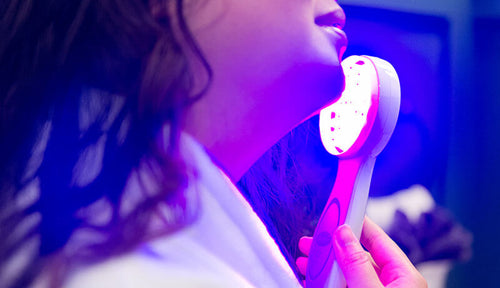
Walk down the skincare aisle of any major retailer, open any beauty app, and you will find LED face masks at nearly every price point. A $29 silicone mask with blinking lights sits two shelves away from a $399 professional-grade panel. Both promise glowing skin, reduced fine lines, and clearer complexions. So what, exactly, are you actually paying for?
The answer lies in a handful of measurable, documented differences that have real consequences for your results. This guide breaks them down clearly, so you can make an informed decision about the device that deserves a place in your routine.
How LED Light Therapy Works on Your Skin
Before comparing devices, it helps to understand the biology behind the technology. LED light therapy, also referred to as photobiomodulation, works by delivering specific wavelengths of light to the skin, where they are absorbed by cells and trigger a cascade of natural biological responses.
Research has confirmed that irradiating the skin with LED light at 600 to 660 nm and 800 to 860 nm stimulates the cells of the dermis, and is effective in improving the appearance of wrinkles and supporting skin renewal.¹ The mechanism starts at the cellular level: red light and near-infrared light penetrate the skin and are absorbed by structures in your cells called mitochondria, energizing them to perform their natural repair and renewal functions more efficiently.²
Each wavelength range has a distinct role:
● Red light (630–660 nm): Supports fibroblast activity in the dermis, which in turn promotes collagen and elastin synthesis, contributing to firmer, smoother-looking skin over time.¹
● Blue light (around 415 nm): Targets the acne-causing bacteria P. acnes at the skin's surface by activating natural compounds within the bacteria, helping to reduce breakout activity.³
● Near-infrared light (830 nm): Works at deeper tissue levels to reinforce the renewal effects of red light treatment.
Built on nearly 20 years of R&D by LED Technologies, Inc., reVive Light Therapy™ devices are engineered around these clinically studied wavelengths, delivering them in formats designed for consistent at-home use.
The Number That Defines Results: Irradiance (mW/cm²)
If there is one technical specification worth understanding before purchasing any LED device, it is irradiance, measured in milliwatts per square centimeter (mW/cm²). This figure describes how much light energy is actually delivered to your skin per unit of surface area, and it directly influences how effectively a device can support deeper skin renewal.
Here is a practical reference frame:
|
Device Category |
Typical Irradiance Range |
Coverage Quality |
|
Entry-level consumer devices |
Below 20 mW/cm² |
Often uneven, with coverage gaps |
|
Quality at-home devices |
35–65 mW/cm² |
Consistent, full-face |
|
Clinical/professional devices |
100 mW/cm² and above |
Maximum, uniform |
A device delivering less than 20 mW/cm² at the skin surface may not reach the deeper dermal layers where fibroblasts reside, which limits its ability to support structural skin changes over time. That said, research has confirmed that collagen and elastin synthesis can increase even with lower-intensity light at 640 and 830 nm when used consistently for short daily sessions,¹ which underscores that correct wavelengths and regular use matter alongside irradiance.
One important nuance: some manufacturers report irradiance measured directly at the LED surface, a figure that can be five to ten times higher than what actually reaches your skin. Always look for irradiance values measured at a realistic working distance, and prioritize brands that publish their testing methodology transparently.
What "Medical-Grade" and "Clinical-Grade" Actually Mean
These terms appear on packaging across every price tier, from entry-level novelty masks to high-end professional panels. The reality is more nuanced than the language suggests.
For most at-home LED skincare devices, the correct regulatory designation is FDA-cleared, not FDA-approved. FDA clearance means the device has been reviewed by the FDA and determined to meet established safety and performance standards. FDA approval is a distinct pathway reserved for different categories of devices. When you see "FDA-approved" applied to an LED skincare device, that terminology is imprecise.
When a brand uses the phrase "medical-grade" or "clinical-grade" on a product box, that language is only meaningful if it is backed by a verifiable FDA clearance number, documented irradiance testing, and precise wavelength specifications. A device listing only "red light therapy" without specifying the nanometer range or irradiance value offers no measurable credibility.
Here is what to look for when evaluating any LED device:
● An FDA 510(k) clearance number (searchable in the FDA's public database)
● Published wavelength specifications in nanometers (nm)
● Irradiance values measured at the skin surface (mW/cm²), not at the LED
● Sufficient LED density for uniform coverage across the treatment area
● A track record of published clinical data or transparent in-house research
reVive Light Therapy™ devices are FDA-cleared and developed through rigorous internal research. In an in-house study conducted by LED Technologies, Inc., 97.4% of participants reported a visible improvement in fine lines, wrinkles, or overall complexion after consistent red light therapy use. A separate in-house study found that 100% of participants observed an improvement in pore appearance, skin tone, texture, or overall skin condition when using blue light therapy consistently.
At-Home LED Devices vs. In-Office Treatments: Understanding the Trade-Off
Professional in-office LED treatments deliver higher irradiance levels and often combine multiple modalities in a single session. The results they can achieve, particularly in terms of speed, reflect that added power. However, professional sessions come at a significant recurring cost and are not accessible to everyone on a consistent schedule.
This is where well-designed at-home devices close a meaningful gap. Research on 660 nm LED therapy has shown that more than 90% of individuals demonstrated a reduction in wrinkle depth and surface roughness after a course of LED treatments, with no adverse events or downtime reported.⁴ A separate controlled trial found significant improvements in skin elasticity and intradermal collagen density after consistent treatment with red and near-infrared light, with benefits sustained beyond the active treatment period.⁵
The key word across all of these findings is consistency. LED light therapy is a cumulative process. A committed routine over weeks delivers the kind of progressive, structural improvement that isolated sessions cannot. That is precisely why the format and ease of use of an at-home device matter enormously. A mask you integrate naturally into your daily routine will consistently outperform a more powerful device that rarely leaves its box.
The reVive Light Therapy™ Lux Collection: Engineered for Real Results at Home
Understanding what separates high-performance devices from ineffective ones makes it easier to see why reVive Light Therapy™ has earned coverage in Vogue, Allure, Good Housekeeping, and InStyle, and why the brand's devices are available through Nordstrom and Macy's.
The Lux Collection spans a range of needs and investment levels, each device engineered around clinically studied wavelengths:
● Lux Glō ($79): Red and blue light therapy in a refined, entry-level format. Ideal for those building a consistent LED routine.
● Lux Clinical ($199): A step up in output and treatment coverage, designed to support more visible, progressive results for anti-aging and anti-acne goals.
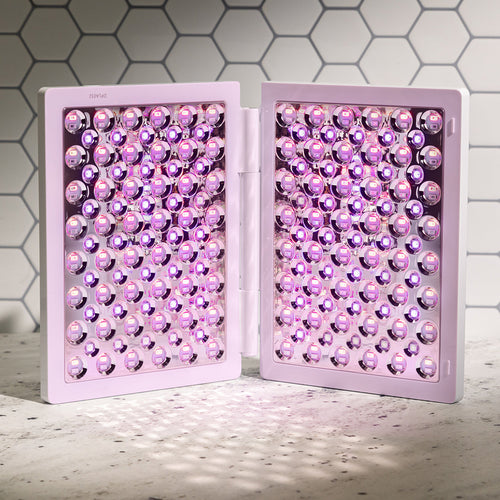
● Lux dpl IIa ($399): A full-face LED panel representing the highest output in the collection, developed for those seeking professional-adjacent performance at home.
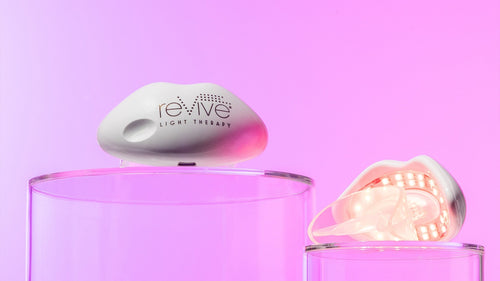
● Lux Lip Care ($99): Targeted red light therapy specifically engineered for the delicate lip and perioral area.
● Lux Spot ($39): A precision blue and red light tool for targeted blemish treatment.
Each device in the Lux Collection is FDA-cleared and built on the same foundational commitment: precision wavelengths, consistent output, and a format that integrates naturally into a daily routine. All devices are safe for all skin tones.
Who Should Use LED Therapy with Extra Care
LED light therapy at the wavelengths used in skincare devices is considered safe for most adults across all skin tones. That said, certain individuals should consult a healthcare provider before beginning treatment:
● People taking photosensitizing medications (including some antibiotics and retinoids at high doses)
● Individuals with a personal or family history of photosensitive conditions
● Anyone who is pregnant and has not yet discussed the use of light therapy devices with their physician
● People with active skin infections or open wounds in the treatment area
Eye safety is also worth noting. While red and near-infrared light used in skincare devices is non-UV and does not carry the same risks as UV exposure, it is always advisable to keep your eyes closed during treatment and to follow the specific eye safety guidelines provided with your device.
Investing in an LED device is a long-term commitment to your skin. The difference between a device that quietly delivers results and one that simply sits on your shelf often comes down to a handful of specifications, and the transparency with which a brand stands behind them.
Explore the full reVive Light Therapy™ Lux Collection and find the device engineered for your skin goals: Anti-Aging Devices | Anti-Acne Devices
Frequently Asked Questions
Do entry-level LED masks actually produce any results?
Some accessible LED masks do deliver a visible surface effect, often described as improved radiance or a post-session glow, which can result from increased circulation. Producing deeper structural improvements, such as meaningful collagen stimulation, generally requires devices with sufficient irradiance, precisely calibrated wavelengths, and FDA clearance. Consistent use with a well-specified device is the most reliable path to lasting results.
What is the difference between FDA-cleared and FDA-approved for LED devices?
FDA-cleared means the FDA has reviewed the device and determined it meets established safety and performance standards. FDA-approved is a more intensive regulatory pathway used for different categories of devices. For at-home LED skincare devices, FDA clearance is the correct and relevant designation. You can verify any clearance number directly through the FDA's public 510(k) database.
How long does it take to see results from at-home LED therapy?
Research has shown significant differences between LED-treated and control groups at 8, 12, and 16 weeks of consistent use.¹ Most people notice an immediate post-treatment glow from improved circulation, while structural improvements to skin texture, fine lines, and tone become progressively visible over 8 to 16 weeks of regular sessions. LED therapy rewards patience and consistency above all else.
Can LED light therapy be used on all skin tones?
Yes. LED light therapy operates through photobiomodulation, a cellular mechanism that functions independently of melanin levels. All reVive Light Therapy™ devices are designed and validated to be safe for use across all skin tones, making this one of the most inclusive clinically-backed skincare technologies available today.
¹ Choi M, et al. "Clinical study to evaluate the efficacy and safety of home-used LED and IRED mask for crow's feet: A multi-center, randomized, double-blind, sham-controlled study." Medicine, 2025. https://pmc.ncbi.nlm.nih.gov/articles/PMC11835066/
² Avci P, et al. "Low-level laser (light) therapy (LLLT) in skin: stimulating, healing, restoring." Seminars in Cutaneous Medicine and Surgery, 32(1), 2013. https://pubmed.ncbi.nlm.nih.gov/24049929/
³ Papageorgiou P, Katsambas A, Chu A. "Phototherapy with blue (415 nm) and red (660 nm) light in the treatment of acne vulgaris." British Journal of Dermatology, 142(5), 2000. https://pubmed.ncbi.nlm.nih.gov/10809858/
⁴ Barolet D, et al. "Regulation of skin collagen metabolism in vitro using a pulsed 660 nm LED light source: clinical correlation with a single-blinded study." Journal of Investigative Dermatology, 129(12), 2009. https://pubmed.ncbi.nlm.nih.gov/19587693/
⁵ Wunsch A, Matuschka K. "A controlled trial to determine the efficacy of red and near-infrared light treatment in patient satisfaction, reduction of fine lines, wrinkles, skin roughness, and intradermal collagen density increase." Photomedicine and Laser Surgery, 32(2), 2014. https://pubmed.ncbi.nlm.nih.gov/24286286/