

LED Light Therapy Devices for Facial Care
2 results
Filter & Sort
-


-
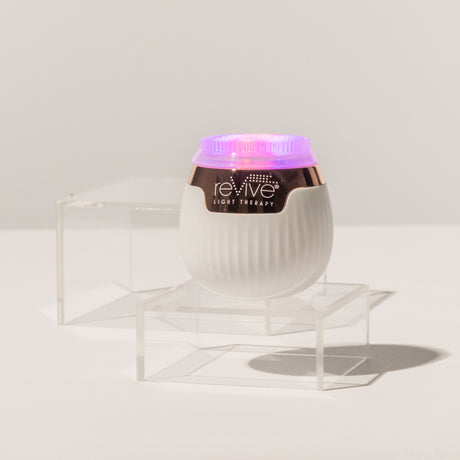
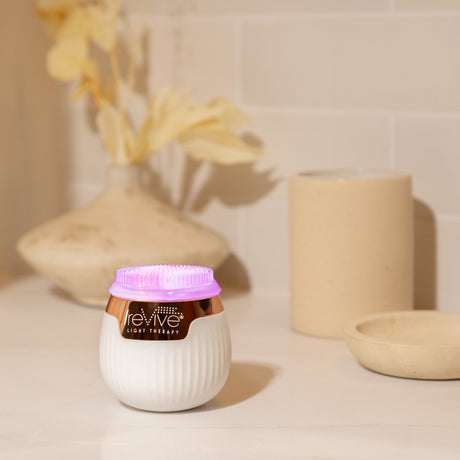 ★★★★★(42)Sale price $103.20 Regular price $129.00 In StockUnit price /Unavailable


LED Light Therapy Devices for Facial Care
Facial care works best when it feels like a moment set
aside, not a task rushed through on the way to something else. LED light
therapy fits naturally into that idea: a few quiet minutes, morning or evening,
where a device does its work while you sit still and let it happen. ReVive's
devices are FDA-cleared OTC Class II devices, so the
ritual is backed by something more than routine, blue light near 415 nm working
on the bacteria behind breakouts, red and near-infrared light around 630-660 nm
reaching the dermis to support collagen and elastin. But the science is only
part of what makes this stick as a habit. The rest is cadence, the sense of a
session having a beginning and an end, and a spot in the day where it belongs.
This page is about that experience, how a session actually feels, and how it
settles into a life rather than sitting on a shelf.
Morning Sessions vs Evening Sessions
Timing changes what a session feels like, even though the
light therapy itself works the same way at either end of the day. A morning
session, done after cleansing and before makeup or sunscreen, has a wake-up
quality to it, a few minutes of stillness before a full day starts moving. An
evening session slows things down instead, coming after the day is mostly done
and before sleep, closer to a wind-down ritual than a start-up one. Neither is
more effective than the other for what the light itself is doing. The choice is
really about which end of the day you're more likely to protect from getting
rushed or skipped, because a ritual only holds if it survives contact with a
busy schedule.
What a Session Actually Feels Like
A full-face session with a panel like Lux Clinical or Lux dpl IIa involves sitting or lying still
while the device sits close to the face for a few minutes; Lux dpl IIa's
full-face sessions are designed to take about three minutes. There's no
discomfort involved, no sensation beyond the light itself, which is part of what
makes it easy to fold into a moment of stillness rather than a chore competing
for attention. Smaller devices change the feel slightly. Lux Spot or Lux Glō involve holding or placing a compact
device against a smaller area, which asks for a shorter, more focused moment
rather than a few minutes of full stillness. Both versions of the ritual work,
they just ask for different amounts of your attention.
How Often, and Why Consistency Matters
A ritual only earns that name if it repeats. Light therapy
is built around consistent use rather than one dramatic session, which means
the version of this that actually changes anything is the one that happens on a
schedule you can keep, not the one that happens once and then gets forgotten
for three weeks. This is where format matters again: a portable device like Soniqué Mini or Lux Glō travels well enough to
keep the ritual going even when your evening doesn't happen in the same place
it usually does, while a panel device like Lux Clinical is suited to a fixed
spot, a bathroom counter or vanity, where the ritual has a home.
Making Space for the Ritual
What turns a few minutes with a device into a ritual is
usually the setup around it, not the device itself. That might mean a specific
chair, a specific few minutes after the rest of a skincare routine is done, or
simply a consistent order of steps that signals the session is starting.
reVive's devices are safe for all skin tones, since the mechanism depends on
wavelength rather than pigment, which means the ritual is available regardless
of what the rest of a routine looks like. Qualifying devices are also FSA/HSA eligible, which for some people is
what turns "I should try this" into an actual purchase, one less
thing standing between the idea of a ritual and the reality of one.
Key Features at a Glance
- Full-face
sessions with Lux dpl IIa are designed to take about three minutes
- Blue
light near 415 nm and red/near-infrared light around 630-660 nm work without
discomfort during a session
- Lux
Clinical ($199) and Lux dpl IIa ($399) suit a fixed spot for a consistent
full-face ritual
- Lux
Glō ($79) and Soniqué Mini ($59) are portable enough to keep a ritual going
while traveling
- Lux
Spot ($39) offers a shorter, focused session for a single area
- All
devices are FDA-cleared OTC Class II devices, independently reviewed for safety
and efficacy
- Safe
for all skin tones, since the mechanism relies on wavelength rather than
pigment
- Qualifying
devices are FSA/HSA eligible
Frequently Asked Questions
Is morning or evening better for a light therapy session?
Neither is more effective for what the light is doing. Pick whichever end of
the day you're more likely to protect from getting rushed, since consistency matters more than timing.
Does a session feel uncomfortable? No, there's no discomfort
involved beyond the light itself, which is part of what makes it easy to sit
through as a few still minutes rather than a chore.
How long does a typical full-face session take? Lux dpl
IIa's full-face sessions are designed to take about three minutes. Session
length with other panel devices is similar, built for a quick but consistent
ritual.
Can I keep the ritual going while traveling? Yes, portable
devices like Soniqué Mini and Lux Glō are built to travel, so the ritual
doesn't have to pause just because your evening isn't happening in its usual
spot.
Do I need a dedicated space for this? Not strictly, though
panel devices like Lux Clinical tend to suit a fixed spot, like a bathroom
counter, where the ritual has a consistent home.
Is this safe for all skin tones? Yes, the mechanism depends
on the wavelength of light rather than skin pigment, so it's safe across all
skin tones.
Give the ritual a few minutes and a consistent spot in your
day, and let the light do the rest.