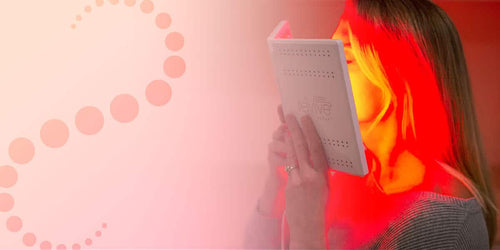
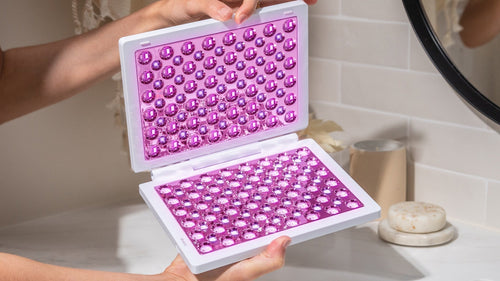
If you've been using your LED device over clothing, through residual sunscreen, or on top of a freshly applied serum, you're likely getting a fraction of the results you could. The question of whether bare skin matters for LED therapy is one of the most common ones we hear, and it has a clear, science-backed answer: yes, it does. But like most things in skincare, the real value is in understanding why, and what to do about it in your daily routine.
This guide covers everything you need to know, from the mechanics of light absorption to which products work against your session, to how to build a routine that actually lets your reVive Light Therapy™ device do its job.
Why Direct Skin Contact Gives LED Therapy Its Best Chance to Work
LED therapy works through a process called photobiomodulation: specific wavelengths of red and near-infrared light penetrate the skin and are absorbed by light-sensitive receptors inside your cells. Within the 600 to 1100 nm wavelength range, this light travels through the outer layers of the skin to reach the deeper tissue, where it triggers a chain of cellular responses that support natural repair and renewal.¹
The key word is penetration. For light to reach the deeper skin layer where it matters most, it has to first make contact with clean skin. Any physical barrier between the LED source and your skin surface, whether that's a layer of fabric, a thick cream, or mineral particles from a sunscreen, reduces the amount of light energy your cells actually receive.
Research has shown that red light supports collagen production and helps renew the skin's structure from within.² That process begins at the skin surface. Anything that interferes with the initial contact point between the light and your skin will affect how consistently those benefits accumulate over weeks of use.
What Gets in the Way: Clothing, Creams, and Common Skincare Ingredients
Clothing and Coverage During Body Treatments
If you're using a panel device for body treatments, the instinct to leave clothing on is understandable. But even lightweight fabrics filter and scatter incoming light. Light-colored, breathable fabrics allow some transmission, though not nearly as much as direct skin exposure. Dark or dense fabrics absorb a significant portion of the energy before it ever reaches your skin. For body sessions, exposing the treatment area directly will always deliver better results.
Skincare Products That Reduce Light Transmission
For facial treatments, the barriers are subtler but equally relevant. Here's what to keep off your skin before a session:
● Mineral sunscreen (zinc oxide or titanium dioxide): Mineral filters are specifically formulated to scatter and reflect light. Even a thin, residual layer can meaningfully reduce the light energy reaching your skin cells.
● Heavy creams and occlusive moisturizers: Thick film-forming products create a physical barrier over the skin surface. They scatter and diffuse light in ways that reduce consistency across your treatment area.
● Makeup and foundation: Foundation creates an uneven surface that varies in light absorption and reflectance. Residue from makeup can also trap heat under a mask device.
● Retinol and potent actives: These are better reserved for after your session. Retinol in particular is best applied as an evening step following LED therapy, not before it.
The simple rule: start your LED session on a freshly cleansed, dry face. That's the baseline that mirrors how clinical protocols deliver light, and it's the baseline your device was engineered to work with.
The Right Order for Your Skincare Routine Around LED Therapy
Morning Routine
If you incorporate LED therapy in the morning, the sequence is straightforward:
- Cleanse
- LED session (bare, dry skin)
- Toner or essence (optional)
- Serum
- Moisturizer
- SPF
Morning LED use is excellent for red light, which supports collagen health and skin radiance. The reVive Light Therapy™ Lux Clinical delivers both red and blue wavelengths, making it a versatile choice for morning or evening use depending on your goals.
Evening Routine
Evening is often the preferred time for LED therapy, especially for anyone using retinol or vitamin C, since those actives can go on after the session without any conflict:
- Cleanse (remove all makeup and SPF)
- LED session (bare, dry skin)
- Treatment serum (vitamin C, peptides, hyaluronic acid)
- Retinol (if part of your routine)
- Moisturizer
After a session, your skin is in a particularly receptive state. Increased circulation and cellular activity following LED exposure means that serums and treatment products applied immediately after may absorb more readily. It's a natural sequencing advantage worth taking full use of.
One Exception Worth Knowing: Very Dry or Compromised Skin
For most skin types, clean and dry is the right starting point. But if your skin barrier is compromised, extremely tight, or reactive, strict dryness before every session isn't always realistic or comfortable. In that case, a very light, water-based serum applied before your session can help maintain barrier comfort without significantly obstructing light transmission. Avoid thick oils, occlusive balms, or layered products. The goal is to minimize barriers, not eliminate every trace of hydration at the expense of skin comfort.
How Often Should You Use LED Therapy for Visible Results?
Consistency is everything with LED therapy. Single sessions don't build lasting results; a regular schedule does. For skin rejuvenation with red light, three to five sessions per week is the range that tends to deliver the best balance of visible improvement and skin tolerance. Typical session durations for facial devices range from around 10 to 20 minutes, depending on the device and the targeted concern.
In an in-house study conducted by LED Technologies, Inc., 97.4% of participants reported visible improvement in fine lines and wrinkles after consistent use of red light therapy.
Frequency, duration, and clean-skin preparation work together. Optimizing one without the others won't give you the full picture.
Is LED Therapy Suitable for All Skin Types?
One of the well-established strengths of LED light therapy is its broad tolerability. It does not use UV light, generates no heat damage, and does not disrupt the skin surface the way chemical or mechanical treatments can. reVive Light Therapy™ devices are designed to be used across all skin tones.
That said, if you have a known photosensitivity condition, are taking photosensitizing medications, or have a history of hyperpigmentation, it's worth consulting a dermatologist before starting a regular LED regimen. As with any skin treatment, starting gradually and paying attention to how your skin responds is always the right approach.
Explore the reVive Light Therapy™ Lux Collection
Ready to build a routine that works? The Lux Collection is engineered to deliver red and blue light at clinically relevant wavelengths, directly to clean skin, right at home.
Explore the Lux Collection | Shop Anti-Aging Devices
Frequently Asked Questions
Does red light therapy have to be used on bare skin?
For optimal results, yes. Light wavelengths need to reach the skin surface directly to penetrate into the deeper skin layers. Clothing, thick skincare products, and mineral sunscreens all reduce the amount of energy your skin cells receive, which can diminish results over time. Clean, dry skin is the most effective starting point.
What should you avoid putting on your skin before an LED session?
Mineral sunscreen, heavy occlusive creams, makeup, and photosensitive actives like retinol are best avoided before a session. These create physical or optical barriers between the light source and your skin. Serums, treatment products, and moisturizer are better applied after the session is complete.
What color light is best for aging skin?
Red light, typically in the 630 to 660 nm range, is the most studied wavelength for skin aging concerns. Research has shown meaningful improvements in wrinkle reduction and skin elasticity using 633 nm and 830 nm LED wavelengths.³ Blue light, on the other hand, is specifically used to target the bacteria associated with acne breakouts.
Can LED therapy cause any side effects?
LED therapy is widely considered a low-risk treatment when used as directed. It does not use UV light and does not cause thermal damage at standard consumer device settings. Those with certain photosensitive skin conditions or who are on photosensitizing medications should consult a healthcare provider before use. Always follow your device's guidelines and use appropriate eye protection during sessions.
¹ Shivappa P, Basha S, Biswas S, Prabhu V, Prabhu SS, Ramakrishna Pai A, Mahato KK. "From light to healing: photobiomodulation therapy in medical disciplines." Journal of Translational Medicine, 23(1430), 2025. https://pmc.ncbi.nlm.nih.gov/articles/PMC12751248/
² Basso FG, et al. "Red light promotes dermis-epidermis remodeling via TGFβ and AKT-mediated collagen dynamics in naturally aging mice." PubMed, 2025. https://pubmed.ncbi.nlm.nih.gov/40808593/
³ Umerani A, Arriaga LS, Mehta Z, Frasier K. "Optimizing Low-Level Light Therapy for Skin Rejuvenation: Efficacy of Wavelengths and Treatment Parameters in Collagen Synthesis and Aging Signs." Modern Research in Inflammation, 14(2), 2025. https://www.scirp.org/journal/paperinformation?paperid=142513